Release date, price, rumors, specs, what we want to see
Oliver Cragg / Android Authority
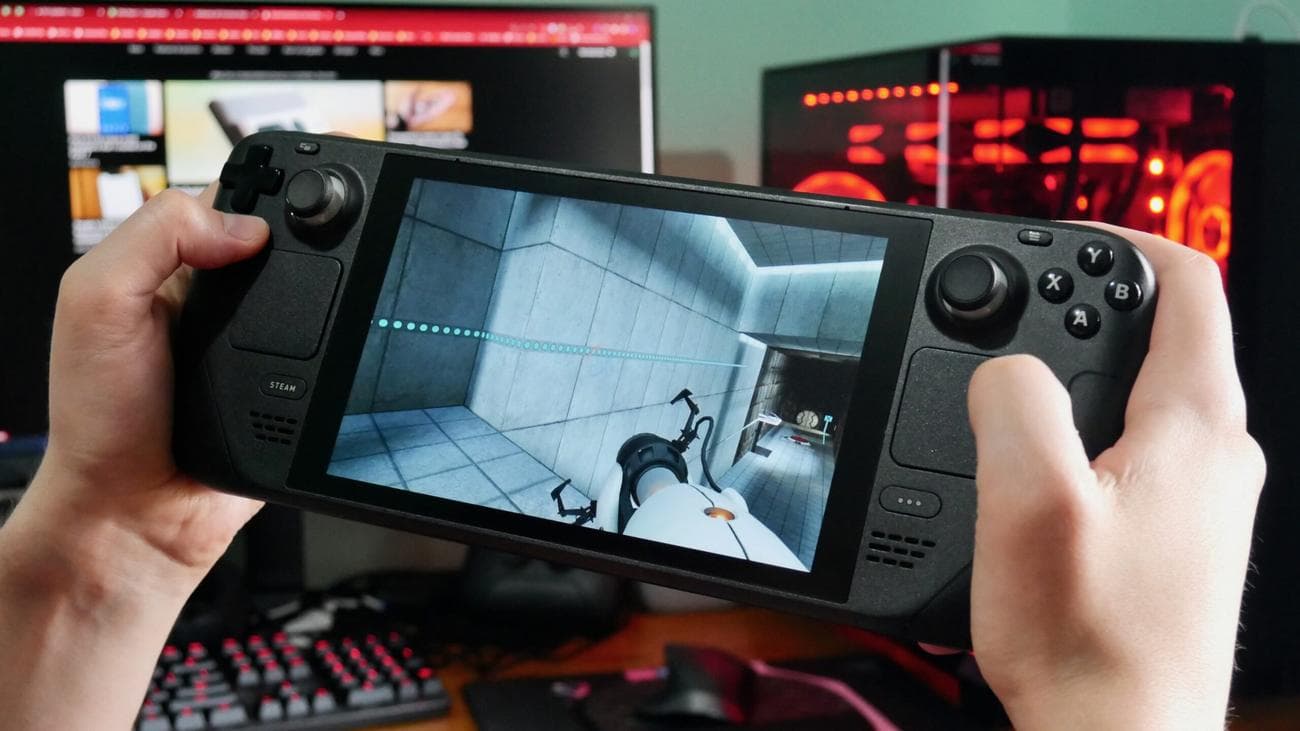
After multiple stabs at the hardware market, Valve finally hit big with the Steam Deck — a handheld gaming console built to play PC games on the go. The black behemoth portable has silenced any naysayers, proving to be a hugely popular Nintendo Switch alternative that used a killer combo of Linux, SteamOS, and a Proton compatibility layer to run an ever-increasing number of the millions of games in the Steam library.
Such unprecedented success for a PC-centric handheld has unsurprisingly drawn the eyes of several competitors. Be it the Windows-powered ASUS ROG Ally, cloud gaming-focused systems like the Razer Edge, or maybe even the long-awaited Nintendo Switch 2, the Steam Deck should remain a fan favorite, but some of its shortcomings will become a little harder to live with as its rivals start to up their game.
With that in mind, here’s what we know so far about Valve’s Steam Deck successor, from release date and price rumors, to early confirmed details, plus all the things we want to see improved for the Steam Deck 2.
Will there be a Steam Deck 2?
Oliver Cragg / Android Authority
Yes, Valve has confirmed that it will release a Steam Deck 2. Though it might not carry that exact moniker, the gaming giant has repeatedly talked about the Steam Deck and its SteamOS platform as an ongoing product line. In an
official booklet
released to mark the six-month anniversary of the Deck’s release, Valve specifically called it a “multi-generational product line” that will be “supported well into the foreseeable future” and promised to “build new versions to be even more open and capable than the first version of Steam Deck has been.” Valve president Gabe Newell also told
Edge
(via
PC Gamer
) in an interview that the Deck is a “permanent addition” to the PC gaming landscape.
Will there be a Steam Deck Pro?
Official talk of new versions of the Steam Deck being on the cards does technically leave the door slightly ajar for a “Steam Deck Pro.” Instead of a full upgrade and design overhaul, this could be a mid-generation upgrade to the existing hardware, equivalent to rival the long-rumored but never-materialized “Nintendo Switch Pro,” and akin to the PlayStation Pro line that Sony tends to launch in the middle of a console cycle. This seems unlikely, however. Talking to
The Verge
, Valve engineer Pierre-Loup Griffais said:
Right now the fact that all the Steam Decks can play the same games and that we have one target for users to understand what kind of performance level to expect when you’re playing and for developers to understand what to target… there’s a lot of value in having that one spec. I think we’ll opt to keep the one performance level for a little bit longer, and only look at changing the performance level when there is a significant gain to be had.
Based on the quote, it appears that, for now, the company has no plans to develop a “Pro” Steam Deck model. At the same time, Griffais didn’t necessarily rule it out, so we can’t be totally sure.
What is the Steam Deck 2 release date?
Oliver Cragg / Android Authority
So, we know from Valve’s own words that there will be a second-generation Steam Deck, but when will we see it? Sadly, those hoping for an imminent Steam Deck 2 release date will be disappointed. In an early 2023 interview with
Rock Paper Shotgun
, Valve designer Lawrence Yang suggested that a “true next-gen Steam Deck” launch “with a significant bump in horsepower wouldn’t be for a few years.”
One major factor in the Steam Deck 2 release will be the core hardware. The Steam Deck is powered by a custom “Van Gogh” AMD Zen 2 CPU and RDNA 2 GPU, and Valve’s comments suggest it may wait for a significant performance bump before building a new Steam Deck. With Zen 4 architecture already debuting in APUs designed for portable play, Valve may wait for RDNA 3 to mature or even sit it out until RDNA 4. Either way, it sounds like we’ll see a Steam Deck 2 in 2025 at the very earliest, though it’s more likely we’ll have to wait until 2026 or beyond.
What features and specs will the Steam Deck 2 have?
Valve has given us a few helpful hints about potential Steam Deck 2 specs and features. Again in the same interview with
The Verge
, both Yang and Griffais said the biggest improvements they wanted to make to improve on the Steam Deck would be a better display and battery life.
With even Nintendo embracing OLED for the top-end Switch model, it seems inevitable that the Steam Deck 2 will
feature
a richer contrast screen that abandons IPS LCD tech. We could also see a reduction in the bezel size to improve on the Steam Deck’s 7-inch display, as well as an increase in resolution from 1280 x 800 to a higher PPI, a refresh rate rise from its current 60fps cap, and variable refresh rate (VRR) support. We’ve seen all of these upgrades on the ASUS ROG Ally, which is the Steam Deck’s closest competitor in terms of profile.
Of course, the ROG Ally notoriously has a fairly limited battery range, capping out at 1-2 hours with all the settings dialed up; a scenario that put the Deck’s already middling battery life into fresh perspective. Considering Valve’s comments to date, it seems likely we’ll see a balance between raw horsepower, display specs, and efficiency. Not to mention, simply adding a larger battery would add more weight to an already hefty gaming machine.
Valve will, however, need to address the performance delta with the ROG Ally and other Windows handhelds. While it’s fair to expect better frame rates from super-premium machines like the AYANEO 2 with its laptop-grade Ryzen 6000 series chip, the ASUS handheld is far closer in price and manages to outperform the Steam Deck when cranked into performance mode and is somehow still quieter due to its impressive cooling system. Yet, the maxed-out ROG Ally’s Zen 4/RDNA 3-based Ryzen Z1 Extreme chip is, as
Digital Foundry
suggests, a clear indicator of why Valve is yet to push a Steam Deck 2, as performance improvements are limited when compared at the same power draw.
As far as early Steam Deck 2 rumors go,
Moore’s Law is Dead
suggests that it will be powered by a “Van Gogh” successor called “Little Phoenix” boasting a Zen 4/RDNA 3 APU that can boost to 4GHz. The YouTuber, citing AMD sources, also hinted that it would have a 128-bit LPDDR controller, though it’s unclear if it’ll only support LPDDR5 RAM or make the jump to LPDDR5X instead.
It may be that Valve also waits for improvements to AMD’s FSR
technology
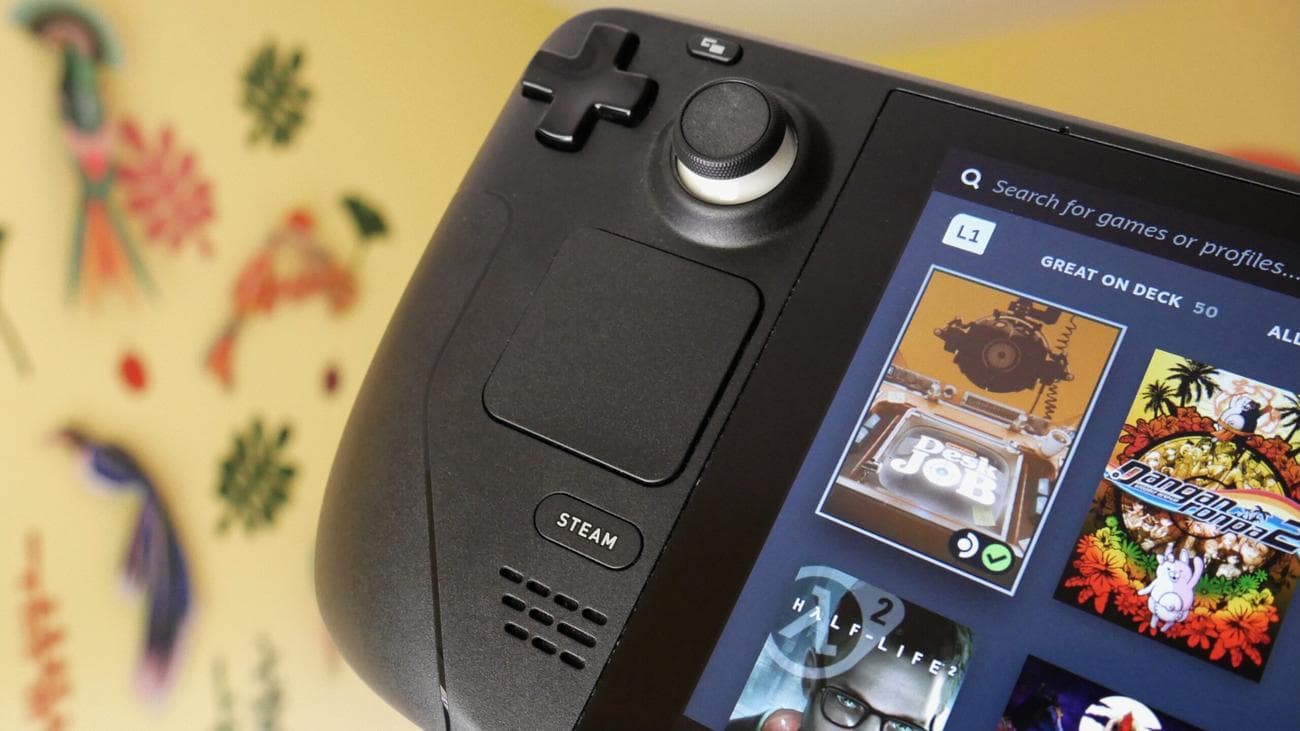
, which has proved a boon for the Steam Deck to push higher frame rates with upscaled resolution. What we know for sure is that SteamOS will continue to evolve, too. Valve’s Linux-based platform came in hot with bugs galore at launch, but its stability and compatibility with games via Proton has improved with every passing month.
Should we get USB-C Thunderbolt 4 support, we could also see the Deck utilize eGPUs to become a full-fledged gaming PC, too, but it’s worth considering Newell’s hint that future Steam Deck hardware will further tap into “the capabilities that mobile gives us, above and beyond what you would get in a traditional desk or laptop gaming environment.” What exactly that means, we’re not sure, but portability seems to be the most important factor. This could also play into the Steam Deck 2’s design, as the first-gen Steam Deck is a beefy console that dwarfs the Nintendo Switch and is also larger than the ROG Ally, while suffering from louder fans and 61g of added weight. Regardless, it’s a safe bet to think the Deck’s unique trackpad controls will stick around to enable more ways to play compared to other handhelds.
What will the Steam Deck 2 price be?
Oliver Cragg / Android Authority
The Steam Deck may have been surpassed on specs, but its price-performance ratio is still incredible. Gabe Newell famously called the Steam Deck’s $399 starting price “painful” but “critical” before launch, suggesting Valve clearly understands that pricing is crucial for mass appeal and sales. While the Steam Deck is still a niche device,
Omdia
reported in April 2023 that the handheld had sold three million units — a fraction of the Nintendo Switch’s 125 million lifetime units, but an impressive base for Valve to entice more buyers into its Steam ecosystem.
For that to continue, the Steam Deck 2 price will have to be fairly reasonable. As such, it’d be fair to estimate that the base model Steam Deck 2 will come in below $500. The three Steam Deck models currently retail for $399 (64GB), $529 (256GB), and $649 (512GB), and we’d expect those to go up if the proposed display and processor upgrades come to fruition. Valve could also charge a little extra if it bundles the Steam Deck 2 with a dock. The first generation shipped before the dock was ready, but you’d hope that production would be smoother for a second-gen device. Priced at $89.99 for the current model, it’d be great to see a dock as an optional bundle for the Deck 2.
With the ROG Ally starting at $599 for a Z1-based model and going up to $699 for the Ryzen Z1 Extreme variant, there’s some room for a price increase at the top end, but we’d like to think Valve will know that it’ll make more money on Steam game sales if it can shift more consoles, even if it takes a hit on the hardware margins.
Steam Deck 2: What we want to see
The Steam Deck is a fantastic handheld but there are some improvements we want to see for the next generation. Here are some Steam Deck 2 features from our wishlist.
An OLED screen with VRR
Oliver Cragg / Android Authority
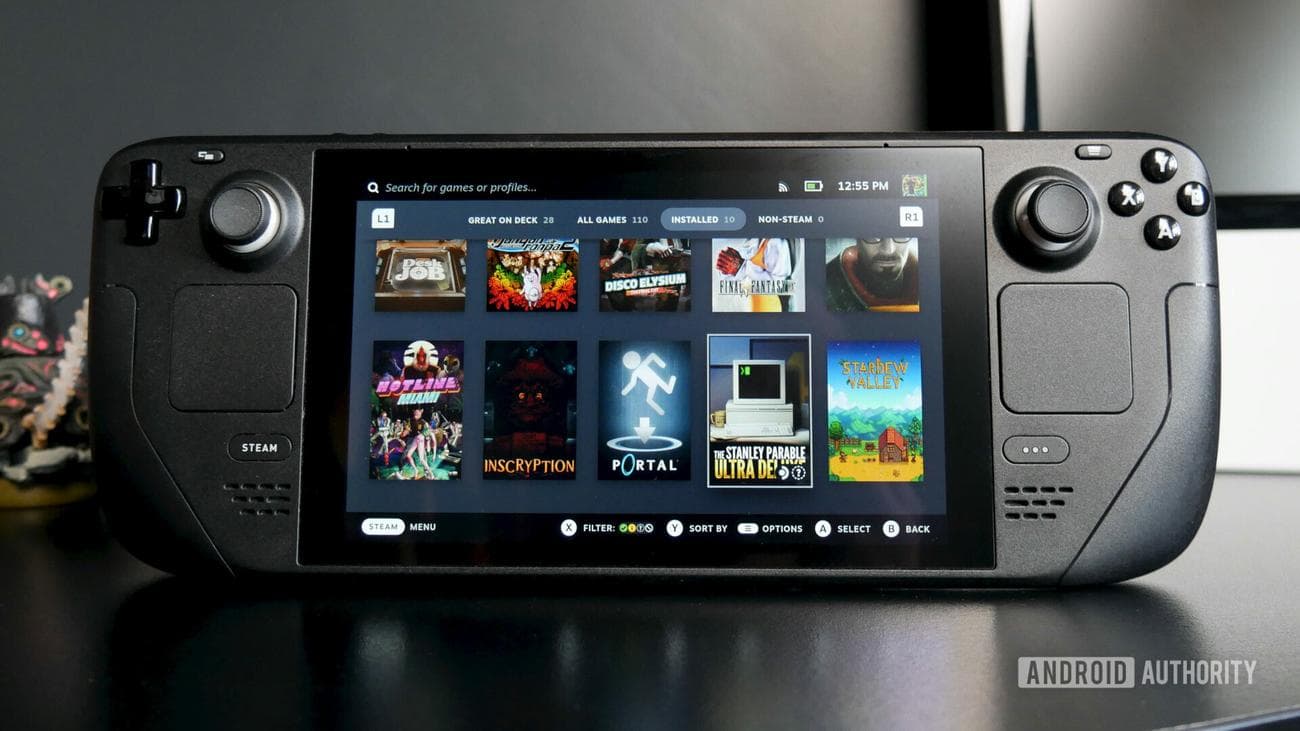
While some balked at the Steam Deck’s sub-1080p resolution prior to launch, we’ve seen with the Nintendo Switch OLED that 720p is just fine. But those inky blacks? Those can’t be beaten. The Steam Deck has an array of scaling options and 800p tends to deliver the best balance between clarity and refresh rates, but even with all the stars aligning, the gray shadows and limited contrast are still a real bummer when compared with Nintendo’s upgraded handheld or any Windows handheld with an OLED panel.
We’ve also seen diminishing returns for higher refresh rates on the ROG Ally, as its 120Hz mode tanks performance in most games even at lower graphics settings. What really separates the ROG Ally, though, is VRR support. The Ally’s FreeSync-compatible screen can dynamically shift its range between 48Hz to 120Hz to avoid screen tearing and deliver smooth frame rates even with temporary performance dips. I really hope Valve is taking notes.
Longer battery life
This is a pretty hard call after requesting an OLED screen alongside the expected APU upgrades, but Valve has already suggested it wants to tackle battery life on the next-generation Steam Deck, and I agree.
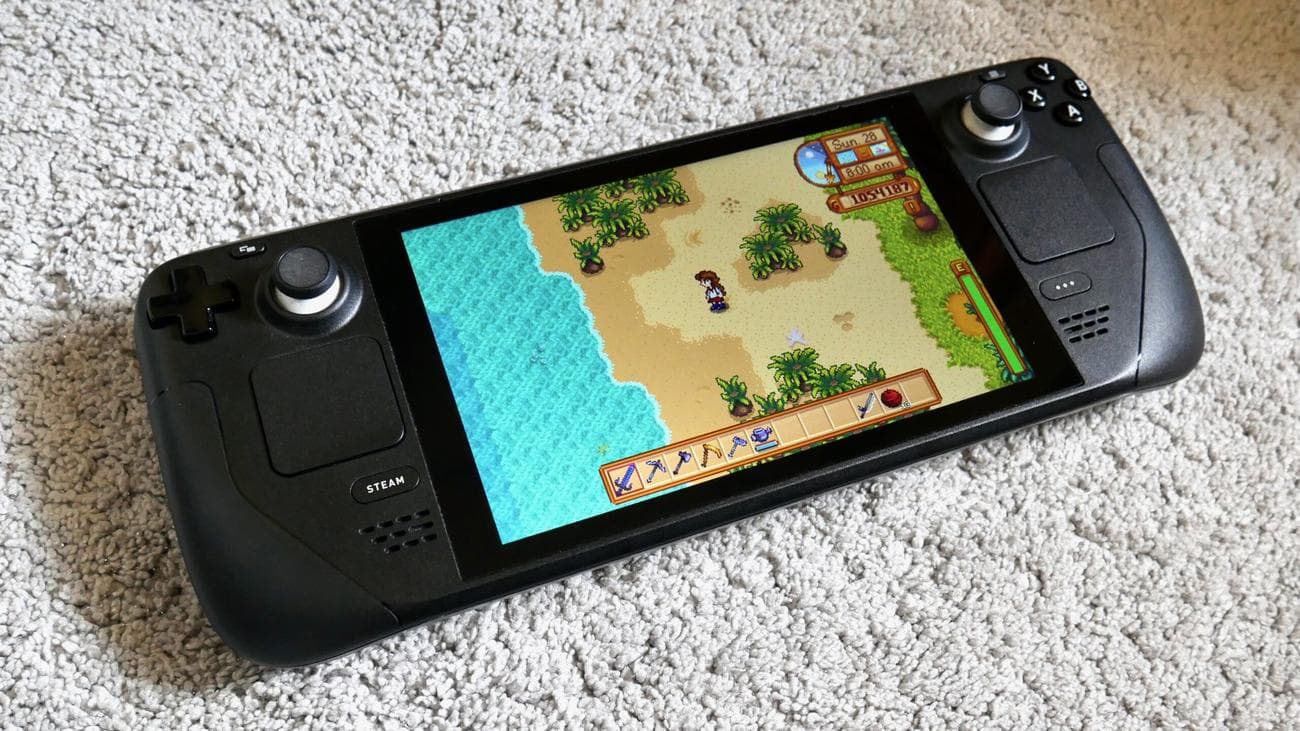
Speaking from my own time spent with the Steam Deck, I don’t have much of a problem with its mediocre endurance, though I mostly use it around the house so I can change rooms and avoid waking my daughter up at night. That means I’m never too far away from a charger, and it suits short bursts of play. I’ve also found that it varies wildly based on the game, as I can play Stardew Valley for about 6-7 hours with no trouble, but more demanding AAA games can drop that to around three (even at the 40fps/800p sweet spot).
Nevertheless, better battery life through software optimization and improved silicon efficiency (which could avoid weight increases) is absolutely an easy pick for my Steam Deck 2 wishlist as it’d make the Steam Deck a far more reliable portable machine.
PC Game Pass support
This is technically out of Valve’s hands, as
Microsoft
unsurprisingly has kept PC Game Pass as a Windows-only platform. Yes, you can run Game Pass via Xbox Game Streaming and Microsoft Edge if you’re an Xbox Game Pass Ultimate subscriber (Microsoft even has an
official support page
for it), but that relies on a consistent internet connection to avoid latency or disconnect issues — a bit of a lame situation for a portable machine.
What I, and a lot of other Deck users want, is support for PC Game Pass downloads directly to the Steam Deck, just like a regular PC. CEO of Xbox Game Studios Phil Spencer has previously ruled out Game Pass on closed platforms like the Nintendo Switch, but the Linux-based Steam Deck is an entirely different beast, at least in theory. Even if Game Pass doesn’t come to Steam as a store app, it could operate as a dedicated Linux app instead. Spencer has already talked about how he wants Game Pass on
as many devices as possible
, and has even
talked up the Steam Deck
as a great place to play Game Pass games via streaming. With Windows handhelds like the ROG Ally able to take full advantage of Game Pass downloads, both Valve and Microsoft could gain from expanding support to Steam Deck.
Personally, I hope it happens earlier, but if not, the launch of a Steam Deck 2 would be good timing for a big Game Pass push for both companies.
Color options
Oliver Cragg / Android Authority
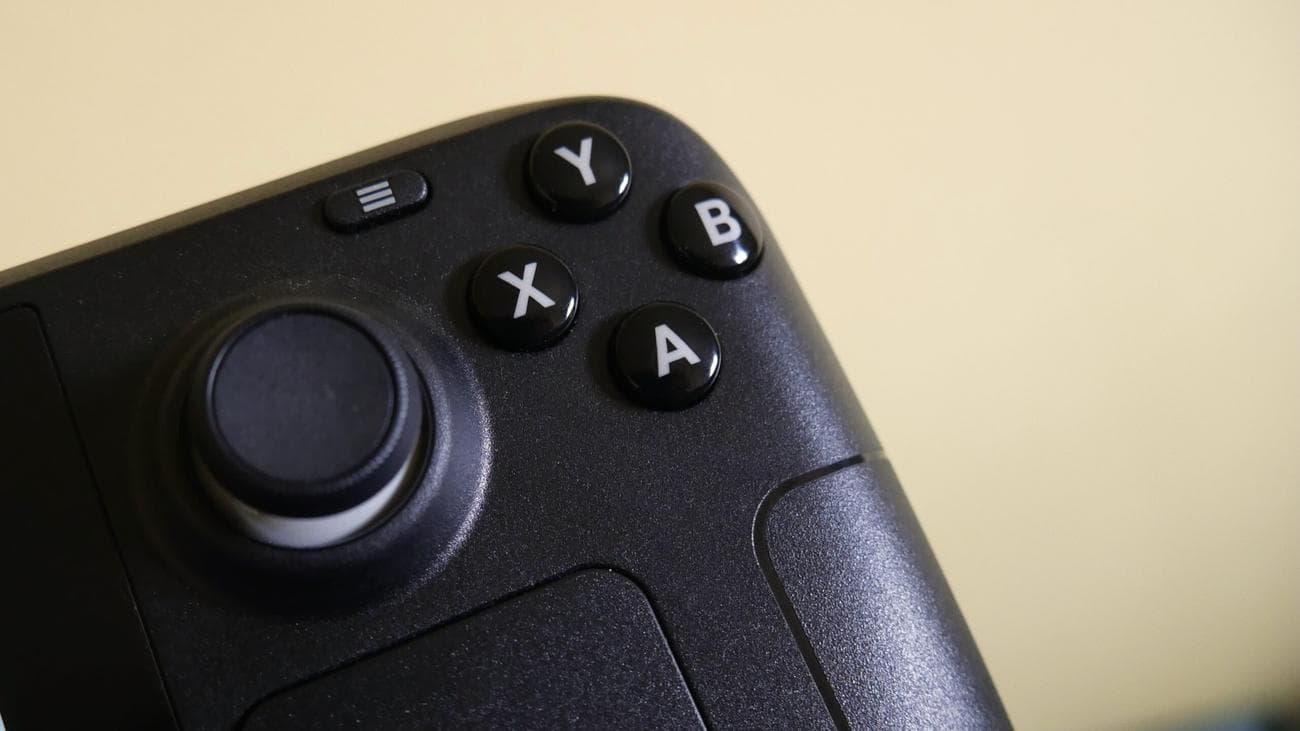
A simple one that doesn’t require technical nous or corporate wrangling — give me a Steam Deck successor that doesn’t only come in matte black. Basic colorways or special game editions like Nintendo does for the Switch; I don’t care, just something less drab, please. You can fix this already with skins, but fitting those can be a pain.
A built-in kickstand
Screen aside, the biggest upgrade the Nintendo Switch OLED enjoyed was the all-new kickstand. Larger, sturdier, and generally better in every way, the Switch OLED’s built-in stand is great for propping the handheld up on a desk or table for play with a controller when you don’t have a TV/dock combo nearby.
The Steam Deck is already a somewhat unwieldy boy due to its size and weight, even though it’s surprisingly comfortable to hold due to its excellent design and ergonomics. But that heft does take a toll eventually, so a kickstand would help ease the pain.