Tesla stock falls as margins slip, VanMoof files for bankruptcy, and Aurora sells $820M worth of stock
Welcome back to The Station, your central hub for all past, present and future means of moving people and packages from Point A to Point B. Your usual host Kirsten Korosec is still away, so you have me for one more week. Let’s jump in.
U.S. policymakers and agencies are looking for ways to regulate autonomous vehicles on a larger scale.
First, there’s the
National Highway Traffic Safety Administration
(NHTSA), which plans to announce a
new rule-making
in September that could benefit AV companies like
Cruise
and
Zoox
, both of which have plans to launch purpose-built robotaxis that don’t have steering wheels or pedals.
General Motors, which owns Cruise,
submitted a petition
in February 2022 to NHTSA to deploy up to 2,500 of the Cruise Origins annually without human controls and may soon have an answer.
At a congressional level, lawmakers will host a
hearing
on July 26 aimed at reviving long-delayed legislation on the safe and regulated adoption of self-driving cars. The panel will consider separate draft legislation from Representative Bob Latta (R-OH) and Representative Debbie Dingell (D-MI).
The hearing will be convened by a House subcommittee titled “Self-Driving Vehicle Legislative Framework: Enhancing Safety, Improving Lives and Mobility, and Beating China.” That last bit is important. American industry for decades has used the threat of some other great superpower gaining the upper hand as a narrative to drive forward technological progress, for better or worse.
Before we dive in, a quick highlight of my TechCrunch+ story this week that looks into Tesla’s stock price, which has dropped about 10% since the company reported Q2 earnings (more on that below), and why it’s priced as a tech company when its margins scream automaker.
Want to reach out with a tip, comment or complaint? Email Kirsten at
or Rebecca at
gmail
.com. You also can send a direct message to
@kirstenkorosec
or
@rebeccabellan
.
Reminder that you can drop us a note at
If you prefer to remain anonymous
,
click here to contact us
, which includes SecureDrop (
instructions here
) and various encrypted messaging
apps
.
Micromobbin’
Some more grim news from
VanMoof
as the e-bike darling that was venture backed to the tune of $189.1 million filed for bankruptcy. VanMoof is considering a third-party sale so that its activities can continue. Those activities being the highly customized parts and the unique digital unlock key that’s connected to VanMoof’s servers. We reported that Cowboy came up with an app to let VanMoof owners retail digital keys to their bikes, but the access is limited.
TechCrunch how the company managed to go bankrupt in a booming e-bike market. One industry insider told us that VanMoof spent big on marketing and over-ordering and neglected to think about supply chain and unit costs.
As TC’s Ingrid Lunden pointed out: “If the unit economics of the bikes never worked out, and an app can be built in a day to unlock those bikes that are in the market already, why would anyone want to assume the assets of the failed startup?”
In other news…
Bird
is officially back in compliance with the NYSE.
London-based bike-share
HumanForest
has launched a new
feature
, Forest Parcel, to provide a zero-emission, on-demand parcel-delivery service.
Taur
, the front-facing scooter manufacturer, has launched its second model,
the Taur II, on Kickstarter
. The scooter has up to 40 miles of range.
Taur also started a campaign to challenge the U.K. government on their stance on owned scooters, which are still illegal to ride on public roads. There are, however, shared scooter pilots, which often serve to sway government and public opinion away from scooters as a viable transportation option due to the behavior of renters and potential for street clutter. The company said it would
reimburse the fines
of any Taur customer who is fined by the police for riding on U.K. roads. And if the scooter is confiscated, Taur will replace it free of charge.
Commsignia
launched a V2X device for e-bikes and other micromobility vehicles that broadcasts messages about the cyclist’s position and direction from other road users. It also receives messages from other vehicles and alerts the rider to potential hazards.
Deal of the week

Autonomous vehicle company
Aurora Innovation
has sold $820 million worth of stock. About $220 million came from a public offering that priced the stock at $3 per share, and the remaining $600 million came from a concurrent private offering of stock priced at $2.70.
Aurora, a pre-revenue company building frontier
technology
, has been spending a pretty penny in its pursuit of commercializing self-driving trucks by the end of 2024. In 2022, the company lost about $1.7 billion.
Aurora hasn’t been shy about its need to raise more funds in order to make it to commercialization and beyond. The company said it has about $785 million in cash, cash equivalents and short-term investments as of June 30, 2023. This infusion of capital gives Aurora another $1.6 billion to play around with. The company is hoping the funds will take it “well into 2025.”
Other deals that got my attention…
Alpha Grid
, a San Francisco–based EV charging deployment optimization startup, raised a $2.5 million pre-seed led by Asymmetric Capital Partners. Twine Ventures also participated.
Lithium-ion battery recycling company
Aqua Metals
has entered into a strategic partnership with
Yulho
, a battery materials company based in South Korea. The partnership includes a $5 million equity investment from Yulho into Aqua.
Berlin-based
Cycle
has secured $11.3 million in Series A funding to expand its e-bike subscription model for the last-mile delivery industry. The funds will be used to expand geographically throughout Europe, including the U.K.; bring on new customers in parcel and mail logistics; and grow its fleet size.
EVgo
and its eXtend partners received $13.8 million in funding from Ohio’s DOT to deploy 20 fast-charging stations.
Farizon
, Geely’s electric and hybrid truck unit, has raised $600 million to expand outside of China.
Fortescue Future Industries
, a global green energy and metals company, will acquire EV truck maker
Nikola
‘s Phoenix Hydrogen Hub project for $24 million.
Singapore’s ride-hailing and food delivery company
Grab
, via its car rental unit Grab Rentals, will acquire
Trans-Cab
, the city-state’s third-largest taxi operator. The terms weren’t disclosed, but the acquisition size is estimated at around $75 million.
New York–based supply chain and visibility startup
Leverage
raised $7 million in a round led by Chicago Ventures.
Auto supplier
Magna
is investing a whopping $790 million to build three new supplier facilities in West Tennessee, including the first two onsite at Ford’s BlueOval City.
Indonesia EV maker
Maka Motors
raised $37.6 million in seed funding to mass produce its two-wheeled EVs. Maka will start deploying its first pilot EVs this month and is aiming for volume production in late 2024.
Redwood Materials
, the battery recycling startup founded by Tesla co-founder J.B. Straubel, is
reportedly
in talks to raise $700 million at a $5 billion valuation. The company would not confirm the reports.
Hong Kong–based delivery robot startup
Rice Robotics
raised $7 million in additional seed funding from Alibaba Entrepreneurs Fund, Soul Capital, Audacy Ventures and others.
Truckstop
was acquired by
FreightFriend
, a platform for capacity and freight management tools.
Notable news and other tidbits

ADAS
Mobileye has introduced a vision-only speed assist solution for automakers. The camera-based Intelligent Speed Assist is launching in production vehicles this year and lets cars sense speed limits without needing to rely on third-party map and GPS data.
Autonomous vehicles
Cruise
‘s full-page ad in several newspapers calling humans terrible drivers got the attention of the former
NHTSA
head. “Using the pain and suffering of those deaths for self-promotion of an unproven and unsafe product is unscrupulous,” said Joan Claybrook.
Speaking of Cruise, the company has officially started initial robotaxi testing in Miami.
Another Cruise-related issue. The
California Public Utilities Commission
— the agency that has the power to give Cruise and
Waymo
final sign-off on their plans to expand commercial robotaxi services across San Francisco 24/7 —
will question
the two companies over how they will deal with robotaxis malfunctioning and blocking access from first responders. The July 31 meeting, which will also hear from city agencies that are opposed to the expansion, might change the terms of the permits.
Kodiak Robotics
is working with
Drivewyze
to launch a weigh station program for self-driving trucks on Texas interstates. The goal is to address how trucks will handle weigh station inspections without a driver present to facilitate the process.
Earnings
Online used car retailer
Carvana
reported higher-than-expected
earnings
of $2.96 billion in Q2, with adjusted EBITDA totaling $155 million. The company sold 76,530 cars during the quarter, which was slightly fewer than expected by analysts.
Carvana also announced it will reduce its outstanding debt by over $1.2 billion by exchanging existing unsecured debt with new notes. The company might also sell up to $350 million in new stock as part of the restructure.
The combined news of healthy earnings and debt exchange deal caused Carvana’s stock to spike Wednesday as high as $60.90. The company’s stock has come back down to earth somewhat, settling at around $47 Thursday at market close.
Tesla
hit $25 billion in revenue in the second quarter, which
just
beat Wall Street estimates. Despite the record revenue, Tesla’s stock started to slide in after-hours and the next day by as much as 10%. That was likely a response to Tesla’s continued hit to automotive gross margins after a series of price cuts. Margins slid to around 18%, which is down from the 25% Tesla was rocking a year ago.
Tesla also reported that solar installations are slipping, but energy storage installations saw a boost in the second quarter.
Electric vehicles
Ford
has slashed the price of its F-150 Lightning, in some trims by as much as $10,000. The automaker cited manufacturing efficiencies as the cause of the lower price.
Ford is also being questioned by
House Republicans
over its battery cell technology deal with China’s
CATL
in its upcoming $3.5 billion battery cell plant in Michigan.
General Motors
is experiencing downtime at its CAMI plant in Canada (which builds the BrightDrop commercial EVs) in order to manage parts-availability issues. Regular operations will resume July 31, and it won’t affect GM’s overall EV production targets in North America — 50,000 in the first half and 100,000 in the second.
Remember the
Kia Boys
? The people who had been following a viral trend on TikTok to steal Kias using a USB cord? A
14-year-old Texas boy
has been linked to nearly 40 thefts.
The
NHTSA
has opened up its
third special investigation
into a
Tesla
crash this year. This is related to a fatal crash involving a 2018 Model 3 and connected to the vehicle’s Autopilot system.
Nissan
has joined the ranks of automakers that have adopted Tesla’s NACS charging standard for its Ariya and future EV models.
Rivian
can move ahead with its EV facility production plans in Georgia after the state’s
Supreme Court declined to hear
a challenge to the validity of about $700 million in tax breaks the EV startup expects to receive.
Stellantis
has
signed $11.2 billion
worth of contracts through 2030 to secure semiconductors needed for its EVs and high-performance computing functions.
India’s
Tata Motors
plans to build a
40 GWh battery cell gigafactory
in the United Kingdom. The over $5.16 billion investment will deliver batteries for JLR and Tata Motors, with supplies beginning in 2026.
Vietnam’s
VinFast
will hold a groundbreaking ceremony at its electric vehicle factory in North Carolina on July 28. The company expects to invest $4 billion in the factory, which is designed to reach a capacity of 150,000 vehicles per year.
Volkswagen
‘s Knoxville Innovation Hub has published research breakthroughs to increase EV range and recycle vehicle materials, the company said. These include a wireless EV charging concept.
TeslaCrunch
It was another big week of Tesla news, especially with the automaker kicking off earnings season. Let’s dive in.
During Tesla’s Q2 earnings call, Elon Musk confirmed that Tesla was in talks with a major OEM to license its FSD software and hardware out to them. FSD (“full self-driving”) is Tesla’s advanced driver assistance system that is NOT fully autonomous, despite the tech’s confusing name. Musk also said that for Q3 only, Tesla owners looking to upgrade to newer models could transfer their FSD over.
Earlier in the week, Tesla announced that drivers with home solar and a Powerwall charger now have an in-app option to exclusively charge up their vehicle via excess solar energy.
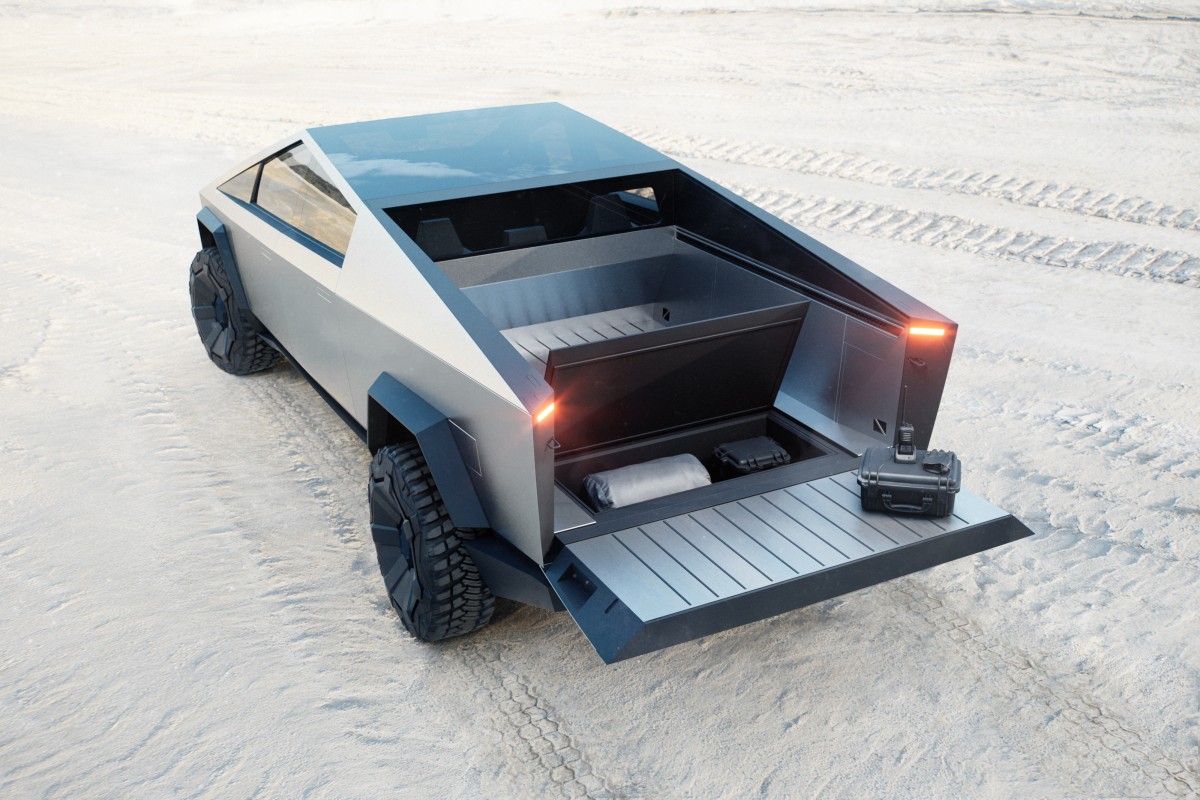
The automaker also showed off its first Cybertruck built at Giga Texas over the weekend, to much fanfare but few specifics. We’re still wondering about production capacity and price, which were not addressed during the earnings call.
Outside the U.S., Tesla is hoping to expand its German factory, but
residents want assurances
on water use, biodiversity protection and environmental impact.
Also, Tesla directors, including Musk, will have to pay $735 million back to the company to settle claims from shareholders that they excessively overpaid themselves. As part of the deal, the directors also agreed not to receive compensation for 2021, 2022 and 2023.
Miscellaneous
ByteDance
‘s
Douyin
(the Chinese version of TikTok) is doing food delivery now? So food delivery giant
Meituan
decided to
add more video
to its app in kind.
Policymakers have introduced a bill that would increase fuel taxes for
private jet travel
from the current $0.22 to $1.95 per gallon, and remove existing fuel tax exemptions for logging and oil or gas exploration. The idea is that if the rich want to pollute our skies, they can pay extra. The revenue generated by the so-called FATCAT Act would be transferred to a fund that would support air monitoring for environmental justice communities.
Spotify
is bringing a
new experience to Teslas
that will make displaying content bolder and more accessible. Drivers can take advantage of features like QR codes for easy log-in, access to audiobooks, and one-touch jump to artists and album pages.
Uber Freight
has
laid off
almost 50 brokerage employees.
People
EVTOL startup
Archer
has brought on Nikhil Goel, co-founder of Uber Elevate, as the company’s chief commercial officer. This comes on the heels of adding former FAA administrator Billy Nolen.
Ride-hail
InDrive
has launched its bid-based ride-hail app in Miami, its first U.S. market. The company’s business model is based on customers naming their own fare and nearby drivers accepting, declining or countering the offer.
Revel
, the Brooklyn-based startup doing shared e-mopeds, EV charging hubs and an all-electric, all-employee ride-hail service, announced that it has hired over 1,000 New Yorkers as Q2 employee drivers.
The
California Supreme Court
rejected an argument
by
Uber
that hoped to limit the ability of its drivers to take employment-related disputes to court. The court unanimously determined that the defendant, driver Erik Adolph, couldn’t sign away his right to represent his peers in a class-action lawsuit, even though his contract requires him to take any employment-related disputes to arbitration. This ruling could have ripple effects in the gig economy space.
Beep beep! TechCrunch Disrupt 2023, taking place in San Francisco on September 19–21, is where you’ll get the inside scoop on the future of mobility. Come and hear from today’s leading mobility entrepreneurs on what it takes to build and innovate for a more sustainable future. Save up to $600 when you buy your pass now through August 11, and save 15% on top of that with promo code STATION. Learn more.