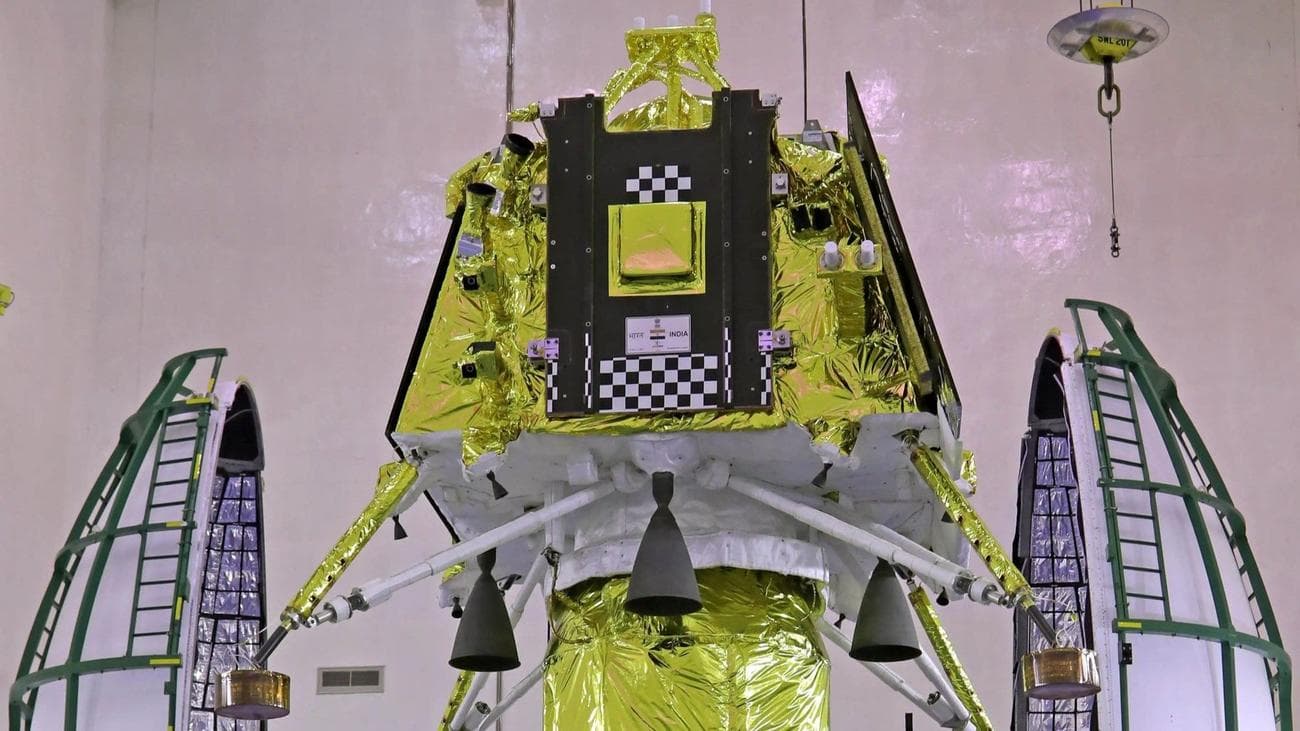
Why India’s Chandrayaan-3 moon mission is a big deal
This could be a record
week
for space exploration—despite the obliterating crash of Russia’s lunar spacecraft on Sunday. The
Indian Space Research Organization (ISRO)
will attempt to land on the moon on August 23 with the
Chandrayaan-3
mission. If successful, India will be only the fourth country to successfully place a probe on the moon, and the first to land at the lunar south pole.
The
first Soviet and American soft landings on the moon
happened all the way back in the 1960s, at the dawn of the Space Race. But it’s not
easy
to deposit a lunar lander—since those early successes, China has been the sole country to join Russia and the US in this feat.
“Very few countries have landed on anything. It’s just really hard, and everything has to work just about perfectly,” says
Dave Williams
, a planetary scientist who archives data of the moon at
NASA’s Goddard Space Flight Center
.
To start, spaceflight is a huge engineering challenge, and the moon is a particularly tricky target. Unlike Earth or Mars, our satellite has no atmosphere, so there’s
nothing
natural to slow down a spacecraft—no air for
parachutes
or
gliders
to use. The only way to get to the surface without crashing is a controlled descent, in which rockets lower the probe all the way down. Plus, the rocket engines must shut off at a precise moment so the craft doesn’t bounce back up off the lunar surface.
[Related: 10 incredible lunar missions that paved the way for Artemis]
Making matters worse, although the moon doesn’t have oceans or cities, it still has plenty of hazards—namely, rocks and craters. Spacecraft have to navigate this terrain mostly on their own. The moon is far away enough from Earth command centers that a lander must be pre-programmed to do what it needs to for a safe landing.
This isn’t India’s first visit to the moon. The country’s lunar program began back in 2008, with a lunar orbiter and impactor in the
Chandrayaan-1
mission. Chandrayaan-1 “played a vital role in raising awareness of space science among the general public,” says University of Florida astronomer
Pranav Satheesh
. “Many students, including myself, were inspired to pursue careers in space science and astronomy upon witnessing the success of ISRO’s programs.”
India made its first attempt at a soft landing with the
Chandrayaan-2
mission in 2019. Unfortunately, that lander, named Vikram after the pioneering physicist
Vikram Sarabhai
, failed in the very last stages of its descent, crashing into the lunar surface.
NASA’s Lunar Reconnaissance Orbiter
later spotted debris from Vikram’s crash as bits of metal strewn across the lunar landscape. The Chandrayaan-2 orbiter remained operational, however, and it continues to collect data in support of the current lunar landing attempt.
[Related: Why do all these countries want to go to the moon right now?]
Chandrayaan-3’s journey so far has been right on track. “Excitement about this mission is definitely palpable across Indian news media, WhatsApp chats, and even in everyday conversations for a lot of folks there,” says
Pratik Gandhi
, an astronomer at
the University of California, Davis.
It entered lunar orbit on August 5, separated from its propulsion system on August 17, and even
snapped a few teaser pics of the moon
on August 18. As the lander descends to the moon in the coming days, the most dangerous moment is likely the landing’s final step: the fine braking phase. “The lander must kill all of its velocity and enter a hover state at about a kilometer above the lunar surface, at which point it must also decide in 12 seconds if it’s above its desired landing region or not and proceed with the touchdown accordingly,” explains science journalist
Jatan Mehta
. Russia’s Luna-25 probe, on the
other
hand,
failed much earlier in its journey—which may be a sign of poor manufacturing or a lack of testing
.
When the Indian lander touches down, it should only be
moving at about 4 miles per hour
. But only the slightest deviations separate a crash landing from a controlled one. “The moon’s gravity, even though it is only about one-sixth of Earth’s, is still more than enough to destroy a spacecraft if it isn’t slowed down,” says Williams.
If Chandrayaan-3 safely reaches the moon, it has some exciting science investigations in store. Unlike any lander to come before, Chandrayaan-3 is targeting the
moon’s south pole
, where astronomers think there are deposits of water. Water is a crucial resource for future longer-term space exploration, both for astronauts to drink and for use as rocket fuel.
Chandryaan-3’s lander, also called Vikram, is carrying a small rover named
Pragyan
. Pragyan is only about 50 pounds—the weight of a medium-sized Goldendoodle—and will roam the lunar surface for about two weeks. It’s equipped with two spectrometers, which can measure the composition of rocks and soil, providing scientists with crucial information about this never-before-explored region of the moon.
The lunar southlands are also a key target for future installments in NASA’s Artemis program, paving the way for semi-permanent human habitation on our nearest celestial neighbor.
In June 2023, India signed on
to the
Artemis Accords
, an agreement for cooperation between countries in space exploration. Japan, another signatory of the accords, even
has a rover in the works with India
, with the goal of drilling into the lunar south pole in search of more water. All of these plans will have a better chance at fruition if India successfully lands on the moon.
“That India is one of the few countries to be able to build lunar landers means Chandrayaan-3’s success will be a critical part of being able to truly sustain the current
global
momentum for a return to the moon,” says Mehta. As more nations try to land on the moon, lessons from success—and failures—should help improve each next attempt.
Tune in to watch the Chandrayaan-3 landing on the
ISRO’s YouTube channel
starting at 7:57 a.m. Eastern time/4:57 a.m. Pacific (5:27 p.m. India Standard Time) on August 23. The actual landing is scheduled to take place approximately 37 minutes later. Within seconds, we should know if the lander has safely touched down on the moon.