Nothing Phone (2) vs Nothing Phone (1): is the massive price jump justified?
Intro
Nothing announced its second generation phone, the Nothing Phone (2), so the big question that everyone wants to find the answer to is how the company has improved on its first attempt at penetrating the phone market.
Well, the change that probably stands out the most is the jump in price. The first nothing phone launched at €469 in Europe, with a $299 price tag in the U.S. as it was later launched there as well as a beta program. The Nothing Phone (2), on the other hand, is immediately available in the States, and it starts at double the price — $599.
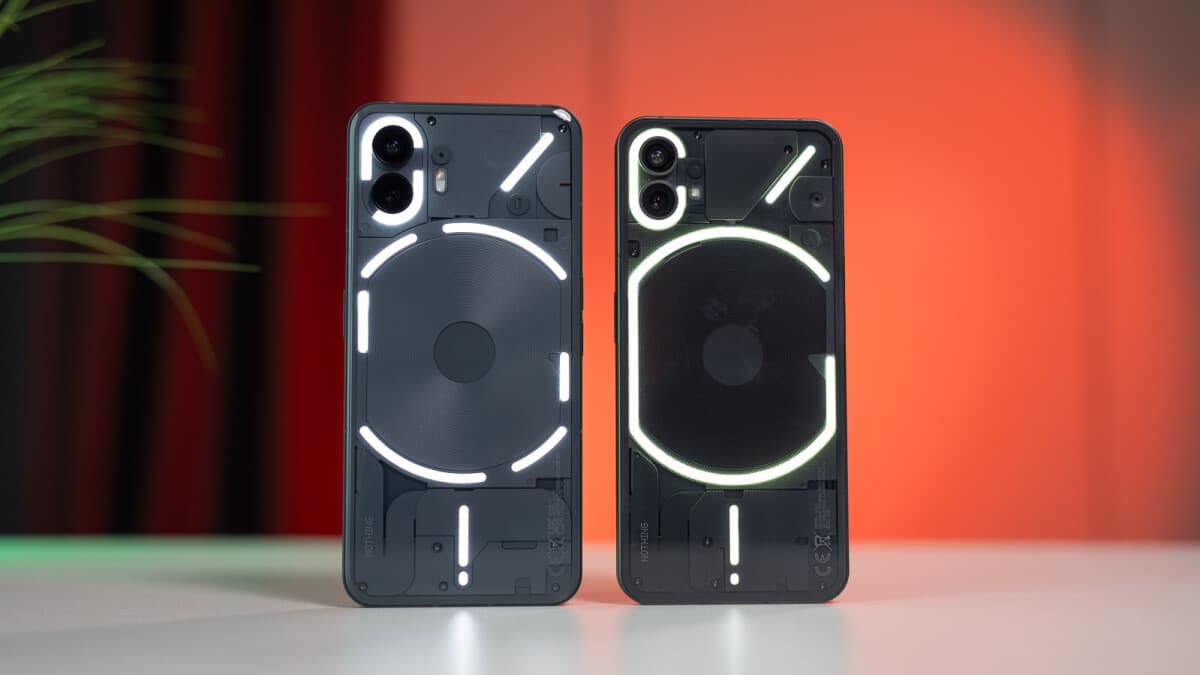
Other than that, the two phones are very similar. Despite the new main camera image sensor, image quality seems to be only slightly better. The design has also remained overall the same albeit with some slight changes and enhancements related to the signature Glyph lighting system on the back.
Nothing Phone (2) vs Nothing Phone (2) in a nutshell:
- Much faster chip
- Brighter, larger, and more power-efficient display
- Faster charging
- Improved main camera
- Glyph system gets more uses
Table of Contents:
Design and Display Quality
Slight but meaningful improvements
Now, the Phone (2) is ever so slightly larger and heavier, but Nothing has improved the ergonomics to make it more comfortable to hold. In particular, we are talking about the slight curves of the glass panel on the back as it reaches the edges of the frame.
One thing we noticed on the Phone (2) during our review was that it is highly slippery, something that wasn’t as apparent with its predecessor from last year.
The Glyph interface that makes the two Nothing Phones stand out from the crowd has also been improved with the Phone (2), which now has more LED lights and therefore a higher level of customization. Now you can track things like a timer or delivery with one of the lights functioning as a progress bar, or assign a very specific notification to be presented via one of the Glyph LEDs on the back.
The color options remain only black and white, although the black is now more of a dark gray than anything else.
When it comes to the displays, the Phone (2) gets a slightly larger 6.7-inch one, compared to the 6.5-inch screen on the Phone (1). But there is more! The new Nothing phone’s display is also LTPO, meaning it can reduce its refresh rate down to just 1Hz, making it much more power efficient. The brightness has also increased on the new model, so it is easier to read in bright light.
Display Measurements:
The fingerprint scanner on both phones is an optical one, and while it does seem to be accurate, we think that it is just a bit too slow for the price at this point.
Performance and Software
Flagship-level of performance
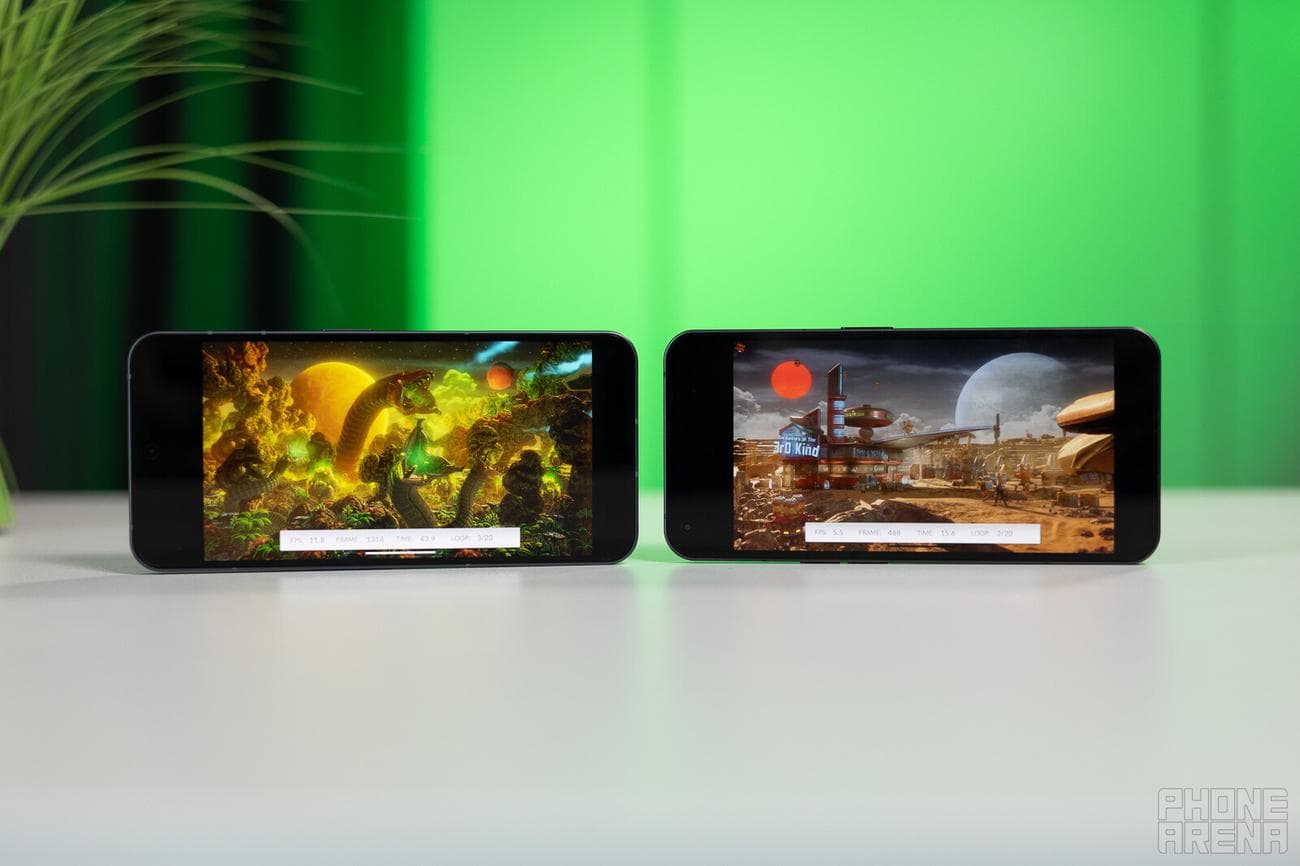
In fact, it seems like the perfect choice if the company is aiming to create a flagship killer and compete with the big boys! That’s because it offers very similar top-notch performance while still keeping the cost lower than it would have been had Nothing gone for the latest and greatest of Android silicon.
Now, the Nothing Phone (1) was a pleasant daily driver. Throughout our time with the phone, it mostly performed quite well during everyday use, including navigating the UI, browsing the web, and playing games. There were some hiccups here and there, but we couldn’t complain.
With the Nothing Phone (2), everything is simply much quicker and snappier. That means less time needed for installing
apps
, carrying out processes like editing photos and videos, faster loading for games, and more. You also have the ease of mind that the chip would remain viable for longer compared to the mid-range Snapdragon 778G+ in the first generation.
Performance Benchmarks:
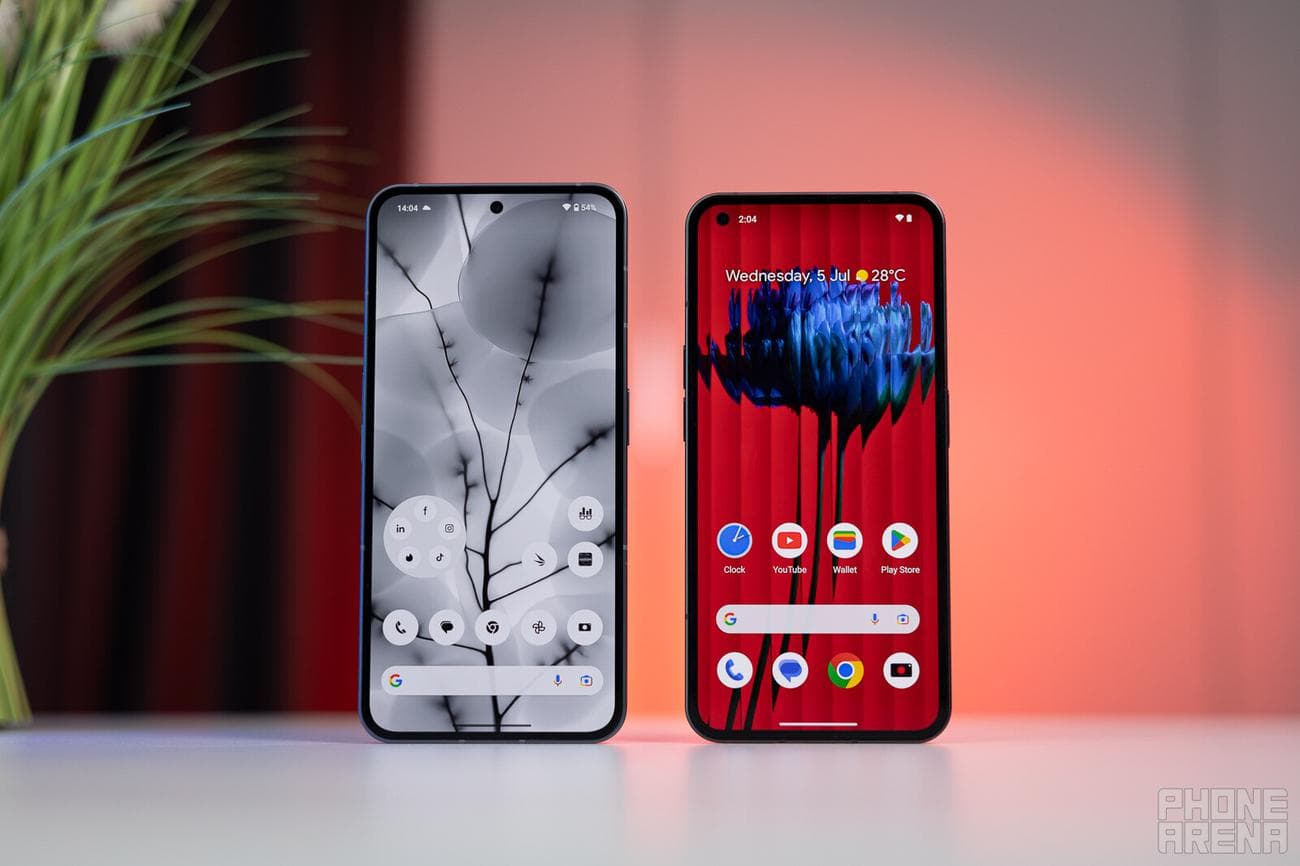
Nothing released its second phone with the latest Nothing OS 2.0 update that’s based on Android 13, which is also coming to the Phone (1) by the end of August. Some of the more notable changes with this update include making all apps monochrome by default, or improved homescreen folders that function as small app drawers, and what we found most useful — quick toggles on the lockscreen for settings that you usually have to access via the notifications shade.
Camera
Zooming in is actually good now
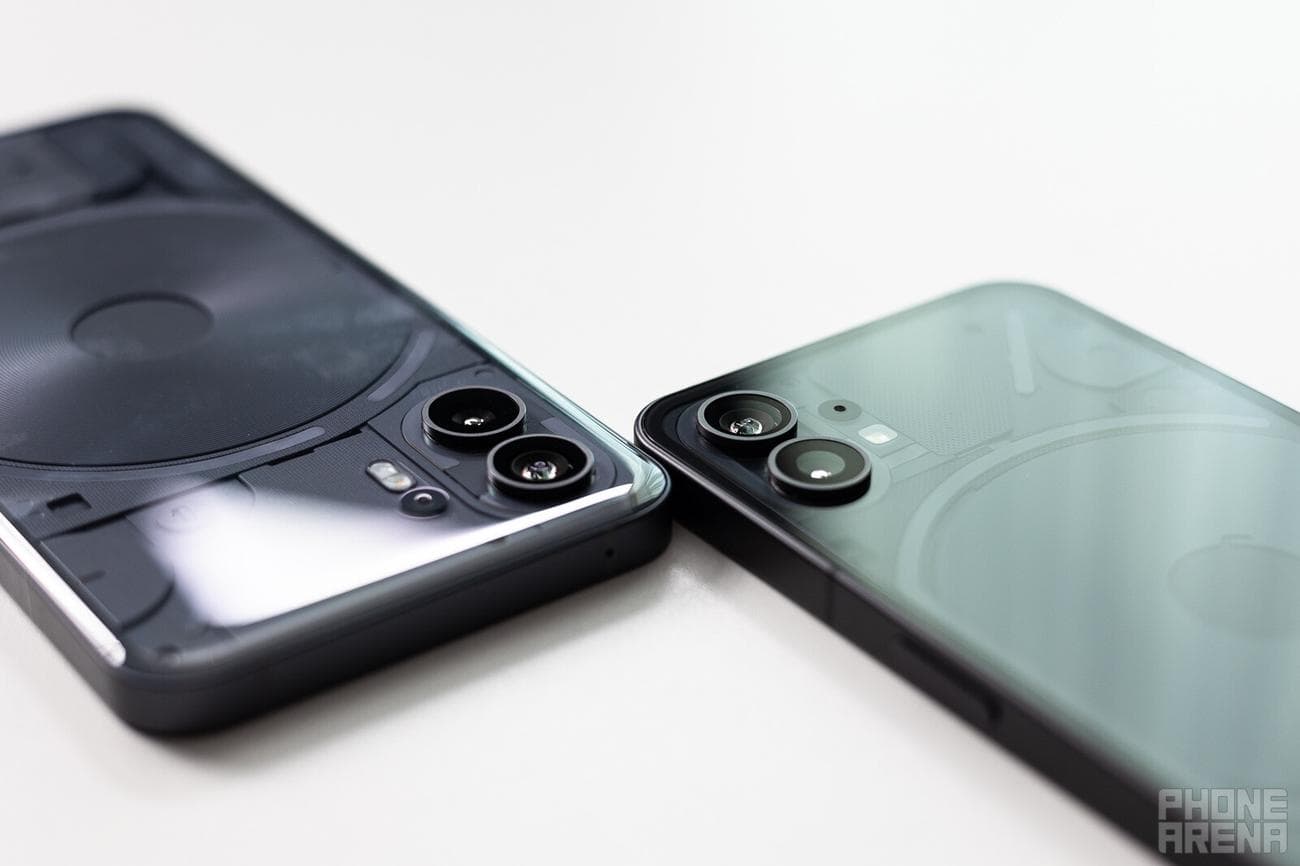
What truly makes a difference is the addition of Qualcomm’s high-end Snapdragon 8+ Gen 1 processor. Having that powerful chipset in the equation allows the Nothing Phone (2), unlike its predecessor, to crop in on the main camera sensor to achieve a 2x Super-Res zoom, which retains image quality. The Phone (1) on the other hand can only digitally zoom in on the image, quickly losing detail.
The one issue that seems to persist is the rather bad HDR performance. Shooting with any of the three cameras (including the front-facing one) in HDR mode seems to be a total gamble. In fact, most of the time the results are unsatisfactory. From flatly exposed shots to white bloom around subjects, there are plenty of examples showing that Nothing still has some work to do with its image processing software.
The selfie camera has also been upgraded with a new 32MP sensor, compared to the 16MP one on the Phone (1).
Main Camera – Day
One difference we can spot that has changed with the Nothing Phone (2) is that there is less sharpening being applied to the image, making it look more natural.
Main Camera – Low-light
The images from the Phone (2) definitely muster up more light from the scene, so it seems the new Sony sensor powering the main camera comes with the ability to capture more light. Details and colors also seem to be better.
Zoom Quality
That new lossless 2x crop in on the main image sensor is definitely visible, even beyond the 2x zoom range. Going as far as 8x zoom on the Nothing Phone (2) seems to still provide an okay image as long as there is good light.
Portrait Mode
The portrait mode on the Phone (2) is much improved compared to the Phone (1), again, probably thanks to the new chipset. Initially, Nothing had made it possible to shoot in Portrait mode only via the ultra-wide camera, but you can now also use this
feature
while shooting with the 2x zoom, making for a much better portrait.
Ultra-wide Camera
There might not be any hardware changes for the ultra-wide camera, but it seems that Nothing has altered some settings and optimized the one on the Phone (2) compared to the Phone (1).
Selfies
The new 32MP selfie camera on the Phone (2) definitely shows its there, with images appearing with much more detail.
Audio Quality and Haptics
Both Nothing phones come with dual speakers. If you were expecting some improvements here though, you might be a bit disappointed. Just like with the previous model, the Nothing Phone (2) can produce very clear-sounding audio, but it lacks richness and depth. In other words, you would probably find it easy to enjoy some podcasts or YouTube videos, but listening to music could leave you wanting more.
Haptics, on the other hand, continue to be superb with Nothing’s latest phone. They are sharp, precise, and strong, pairing up perfectly with the iconic Glyph system on the back panel.
Battery Life and Charging
Noticeably faster charging
The second generation Nothing Phone comes with a slightly larger battery with a capacity of 4700 mAh compared to the 4,500 mAh inside the Nothing Phone (1). However, we did not see that much of a difference when it came to battery life, except in one area that was a bit problematic with the first generation.
PhoneArena Battery Test Results:
featured
with last year’s model.
The charging speed has increased with the Nothing Phone (2), going up from 33W to 45W. Wireless charging remains at 15W, and the phone still supports reverse wireless charging too. Unfortunately, while the new model comes with a cool transparent USB-C cable, it still does not have a charger.
Specs Comparison
| Specs | Nothing Phone (2) | Nothing Phone (1) |
|---|---|---|
| Dimensions | 6.38 x 3.01 x 0.34 inches (162.1 x 76.4 x 8.6 mm) | 6.27 x 2.98 x 0.33 inches (159.2 x 75.8 x 8.3 mm) |
| Weight | 7.10 oz (201.2 g) | 7.02 oz (193.5 g) |
| Screen | 6.7 inches | 6.5 inches |
| Processor | Qualcomm Snapdragon 8+ Gen 1 (4nm) | Qualcomm Snapdragon 778G+ (6 nm) |
| RAM, Storage and Price | 8GB/12GB, 128GB/256GB/512GB, starts at $599 | 8GB/12GB, 128GB/256GB, started at $300 |
| Cameras |
|
|
| Battery Size | 4700 mAh | 4500 mAh |
| Charging Speeds | Wired: 45.0W; Wireless: 15.0W | Wired: 33.0W; Wireless: 15.0W |
Summary and Final Verdict
Truth be told, most of what’s improved with the Phone (2) has to do with the Snapdragon 8+ Gen 1. Now, yes, it is a far superior chipset that is capable of much more than the Snapdragon 778G+ in the Phone (1), but it acts more as a futureproofing. The Nothing Phone (1), apart from a few hiccups here and there, was still perfectly capable of most tasks and scenarios.
So, it all boils down to how much you need that extra horsepower. There is a feel for diminishing returns when it comes to the price-to-performance ratio, so make sure you really need that if you decide to upgrade to the Nothing Phone (2).
Yeah, besides the faster processor, you also get some other minor upgrades, but that’s just what they are — minor. Nothing has promised 3 years of OS updates, so you can at least wait and see what the company comes up with next year if you want to stick to Nothing phones. Hopefully, the price remains the same as this year, but there would be even more meaningful changes to justify it.