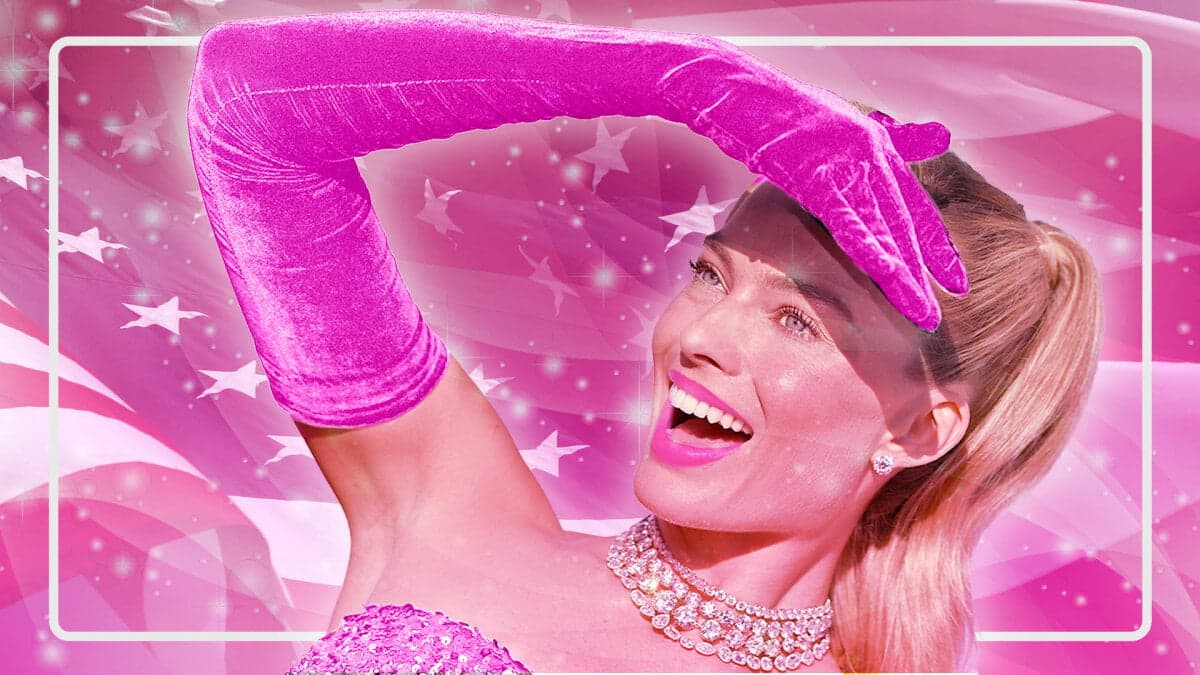
How ‘Barbie’ became the American monoculture of the moment
It’s been a long time since a single piece of media has felt as visually ubiquitous or culturally inescapable as
Barbie
. The film has managed to break box office records and achieve a stunning omnipresence across politics, fashion,
social media
, news, and music. While the doll itself has been a household name for more than 60 years,
Barbie
has transcended mere popularity to become the single most dominant cultural topic in America right now, a veritable monoculture.
How has the must-see movie managed to capture our collective imagination and ire? We break it down below.
What is a monoculture?
In 2023, monoculture — a sociological term that can be used to describe a unifying event, value, goal that defines a group of people — is nearly mythological in the U.S. As our entertainment, politics, and identities have fractured, so has the culture.
The Olympics, for example, used to be a grand, uniting spectacle watched the world over. Now NBC, the exclusive broadcaster of the events,
struggles with low U.S. viewership
.
American Idol
drew 38 million American viewers at its peak, more than the entire population of California at the time. And while Europe can still unite over something like Eurovision, which drew in
162 million viewers
in 2023, the U.S. has no equivalent. In 2017,
The Ringer
called
Game of Thrones
, which pulled in an average of 23 million viewers an episode, the
“last vestige of the [television] monoculture.”
As for movies, the closest we have is the Marvel franchise which, in the last 15 years, has claimed the 2nd, 6th, 7th, 10th, 14th, and 15th top grossing films of all time.
Barbie
plays into post-pandemic nostalgia
The fear, sorrow, and loneliness of the pandemic prompted people to
look toward the past
, when life seemed less uncertain. As we navigate the post-pandemic (though not post-COVID) era, we are still craving the comfort of something familiar. That need has coincided with the resurgence of Y2K style and
simpler forms of technology
.
Barbie
both intentionally and unintentionally leverages this pull towards the past, reuniting us with a figure that was, for most of us, a prominent presence in our childhood.
Pertinent politics contribute to a compelling narrative
Since her 1959 introduction, Barbie has been an inherently political figure, leveraged to serve both feminist and anti-feminist narratives (n.b. equal rights shouldn’t be a political issue, but the world we live in demands otherwise). Gerwig’s
Barbie
unpacks the dolls’ complicated narrative, making no qualms about the focus of the film: empowering women.
But to be truly monocultural,
Barbie
must also stir something in people who are not, let’s say, the film’s target audience. And their engagement with the movie doesn’t necessarily have to be positive. Right-wing thought leaders have decried the film, even calling to boycott it. Their discontent is part of what makes
Barbie
a movie for the masses.
Smart casting ensures nearly everyone has their own Barbie or Ken
Modern politics are identity politics, and
Barbie
makes a point of spotlighting a relatively diverse cast that reflects the makeup of the moviegoing audience.
The casting team cast a wide net, hiring actors from a range of media, including
Ugly Betty
and
Superstore
star America Ferrera, YouTuber-turned-acclaimed-showrunner Issa Rae, gay icon Kate McKinnon, trans it-girl model and actor Hari Nef, three (count ’em, three) members of the Netflix show
Sex Education
, and the heartthrob-of-the-2000s Ryan Gosling. The movie is packed with cameos that provide representation in addition to cheer-worthy Easter eggs.
The sheer size and breadth of the ensemble ensured that most people would see an actor they recognize in
Barbie
, and that
Barbie
-related material would be widely viewed across social media.
Musical masterstrokes make the soundtrack its own event
The
Barbie
soundtrack is stacked with hits and hitmakers, a strategy that all but ensured it mainstream radio play and heavy rotation on TikTok.
“Barbie World” by Nicki Minaj and Ice Spice, which samples Aqua’s 1997 hit “Barbie Girl” hit no. 7 on the Billboard Hot 100. Dua Lipa’s track for the album “Dance the Night Away” is sitting at no. 25 and climbing. Other artists include established acts like Billie Eilish, Lizzo, Charlie XCX, Karol G, Tame Impala, Khalid, HAIM, Sam Smith, and rising talent like PinkPantheress and FIFTY FIFTY.
Marketing that just doesn’t quit
To make
Barbie
feel like an inescapable cultural event, the marketing team got pretty literal, making sure
Barbie
was utterly ubiquitous. A dizzying number of branded collaborations — from a Progressive commercial to Barbie-themed Crocs, Pinkberry (and Coldstone), and even
Google
Searches — made
Barbie
and its signature pink practically pervasive.
Barbie
‘s marketing team’s tireless work has made it to meme-status. Twitter users have been jokingly attributing unrelated pink-tinged events — like the spotting of a rare pink dolphin or a
stunning peachy sunset
— to the movie campaign.
#Barbenheimer on the brain
There’s no better free publicity than a meme taking on a life of its own. Barbenheimer is a portmanteau of
Barbie
and
Oppenheimer,
the Christopher Nolan film that premiered on the same day with a much darker subject matter. Online, the contrast between the technicolor
Barbie
and the brooding, atomic bomb-tell made for hilarious Twitter fodder. Offline,
more than 200,000 people
bought tickets to a Barbie-Oppenheimer double
feature
.
Barbiecore buzz has us thinking pink IRL
The combination of all these elements, and especially Barbie’s branded collabs with fashion retailers, has led to a boon in Barbie-fied apparel and decor. It’s not enough to
see
Barbie, we want to
be
Barbie. Shopping app LTK tells Mashable that it has seen a 644% increase in shopper searches for Barbiecore and Barbie in just the past week.
As a result, Instagram feeds and theater queues have been flooded with pink, as influencers and normal folks alike are inspired to express themselves in Barbie’s image. And the Barbiecore buzz is a tide that lifts a lot of different boats; LTK has seen a 21% increase in searches for Birkenstocks, which are mentioned in the film, since
Barbie’
s opening day.
We really are living in a Barbie world.