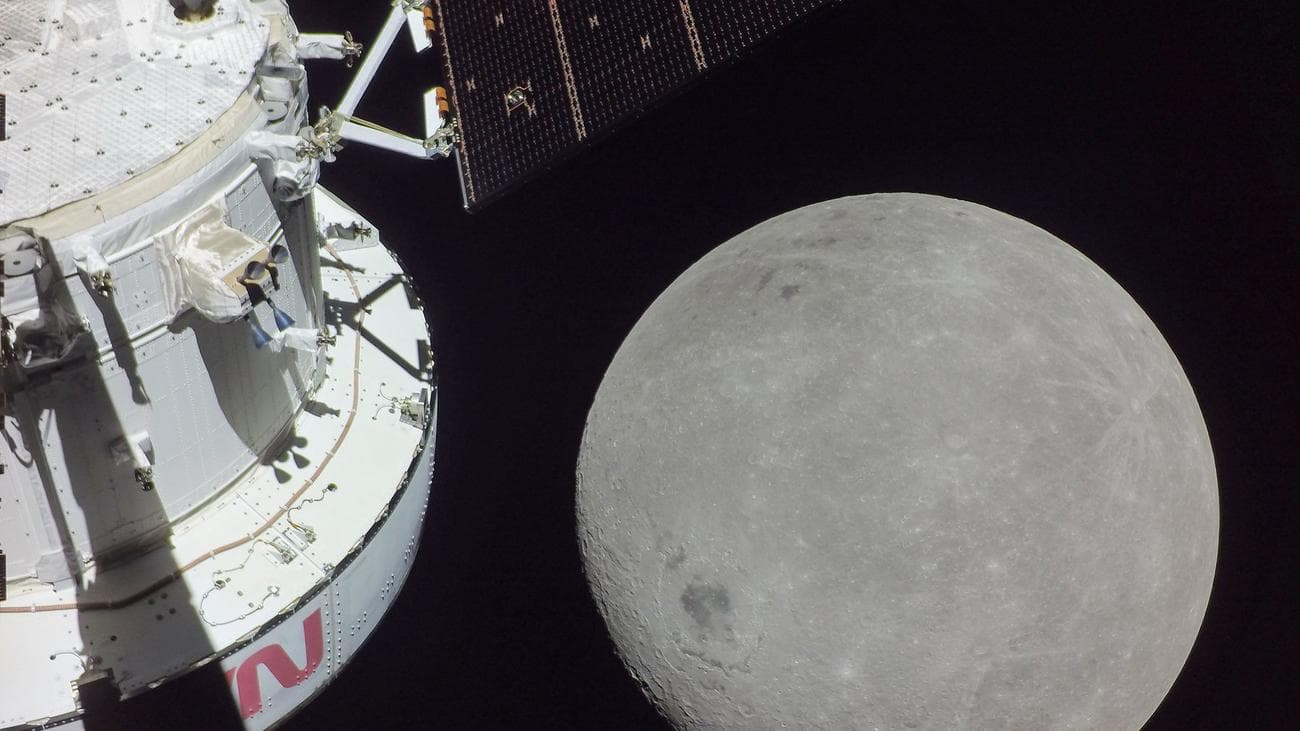
In 2022, NASA’s Artemis I mission traveled 1.4 million miles into
space
. When the Orion spacecraft flew by the moon, future trees were on
board
. The uncrewed spacecraft contained
seeds for five tree species
, including sweetgums, Douglas-firs, sycamores, loblolly pines, and giant sequoias. After the 25.5 day mission, the Forest Service
successfully germinated the seeds
. Now, community organizations and schools across the United States now apply to receive a seedling grown from one of the
tree seeds that flew by the moon
that will grow to become official
Artemis Moon
Trees.
[Related:
Artemis I’s solar panels harvested a lot more energy than expected.
]
NASA and the
United States Department of Agriculture Forest Service
will distribute the Artemis Moon Tree seedlings in an effort to “create new ways for communities home on Earth to connect with humanity’s exploration of space for the benefit of all” and promote STEM in the classroom and beyond.
Institutions that can apply for a seedling include universities, museums, science centers, organizations that serve K-12 schools, and government organizations. Applications are posted
here
and are due by Friday October 6.
Seeds for five tree species that flew on the Artemis I mission. CREDIT: NASA/USDA Forest Service.
The Artemis I Mission launched on November 16, 2022 and was the first integrated
test
of NASA’s latest deep space exploration
technology
: the Orion spacecraft itself, the all-powerful Space Launch System rocket, and the ground systems at Kennedy Space Center. Orion returned to Earth after 25.5 days in space, where it journeyed 270,000 miles away from Earth, orbited the moon, and collected crucial data along the way. A plush Snoopy zero-gravity indicator,
LEGO minifigures
, and three ‘moonikins,’ were also aboard the spacecraft with the Artemis seeds.
“NASA’s Artemis moon trees are bringing the science and ingenuity of space exploration back down to Earth,” NASA Administrator Bill Nelson
said in a statement
. “Last year, these seeds flew on the Artemis I mission 40,000 miles beyond the Moon. With the help of the USDA, this new generation of Moon trees will plant the spirit of exploration across our communities and inspire the next generation of explorers.”
[Related:
Before the Artemis II crew can go to the moon, they need to master flying high above Earth
.]
The Artemis seeds are also the second generation of Moon Trees. In 1971, Apollo 14 Command Module Pilot
Stuart Roosa
, carried hundreds of tree seeds about the mission as a part of his personal kit. Roosa was a former
Forest Service smokejumper
, a group of specially trained wildland firefighters who are often the first to respond to remote firefighters. When Apollo 14 returned, the Forest Service germinated the seeds and the first generation of
Apollo Moon Tree seedlings
were then planted around the United States.
NASA and the Forest Service hope that this next
21st Century generation of Moon Trees
carry on the legacy of inspiration launched over 50 years ago.
“The seeds that flew on the Artemis mission will soon be Moon Trees standing proudly on campuses and institutions across the country,” Forest Service chief Randy Moore
said in a statement
. “These future Moon Trees, like those that came before them, serve as a potent symbol that when we put our mind to a task, there is nothing we can’t accomplish. They will inspire future generations of scientists, whose research underpins all that we do here at the Forest Service.”